Zeta Apostolou first drew breath in the small village of Athanasios Diakos, located in the region of Fokida. She shares a familial bond with the acting world through her sister, Natasha Apostolou, who also pursued a career in performance.
Her initial steps upon the stage included a notable appearance in Manos Hadjidakis's theatrical piece *Odos Oneiron*. The silver screen welcomed her in 1960, with minor parts in the productions *Sousourada* and *Thisiastika gia to paid mou*. A pivotal moment arrived in 1961 when she signed with the prestigious Finos Film studio, which would become the foundation for her most memorable work.
Among her significant roles, her performance in Dinos Dimopoulos's 1963 social drama *Amok* stands out—a film that courageously confronted the horrors of war, racial prejudice, and bigotry. The movie found audiences beyond Greek borders, with the provocative scenes featuring Apostolou even gracing its promotional artwork. Two years later, she took a leading part in Vassilis Georgiadis's rural epic *The Soil Was Dyed Red*. That same year, she made cinematic history with what is often cited as the most iconic striptease sequence in Greek film, appearing in Dimopoulos's *The Enemies*.
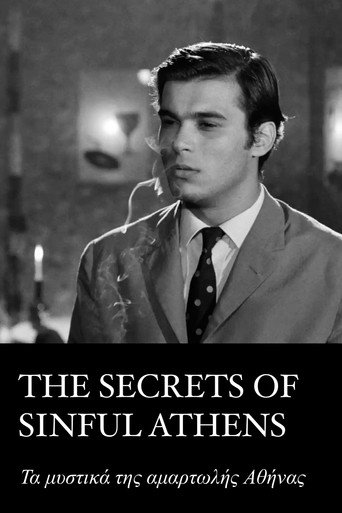
The mid-to-late 1960s brought further recognition through films like *Remali* (1965), *The Secrets of Sinful Athens* (1966), and *Gabriela, the Sinner of Athens* (1966). While she excelled in dramas, she also brought a magnetic, assertive presence to comedic roles. As the golden era of Greek cinema waned, she transitioned to video productions, though these never achieved lasting fame. With the rise of private television, she returned to the small screen, appearing in series such as *Police Officer Thanasis Papathanasis* (1990), *
Her initial steps upon the stage included a notable appearance in Manos Hadjidakis's theatrical piece *Odos Oneiron*. The silver screen welcomed her in 1960, with minor parts in the productions *Sousourada* and *Thisiastika gia to paid mou*. A pivotal moment arrived in 1961 when she signed with the prestigious Finos Film studio, which would become the foundation for her most memorable work.
Among her significant roles, her performance in Dinos Dimopoulos's 1963 social drama *Amok* stands out—a film that courageously confronted the horrors of war, racial prejudice, and bigotry. The movie found audiences beyond Greek borders, with the provocative scenes featuring Apostolou even gracing its promotional artwork. Two years later, she took a leading part in Vassilis Georgiadis's rural epic *The Soil Was Dyed Red*. That same year, she made cinematic history with what is often cited as the most iconic striptease sequence in Greek film, appearing in Dimopoulos's *The Enemies*.
The mid-to-late 1960s brought further recognition through films like *Remali* (1965), *The Secrets of Sinful Athens* (1966), and *Gabriela, the Sinner of Athens* (1966). While she excelled in dramas, she also brought a magnetic, assertive presence to comedic roles. As the golden era of Greek cinema waned, she transitioned to video productions, though these never achieved lasting fame. With the rise of private television, she returned to the small screen, appearing in series such as *Police Officer Thanasis Papathanasis* (1990), *